
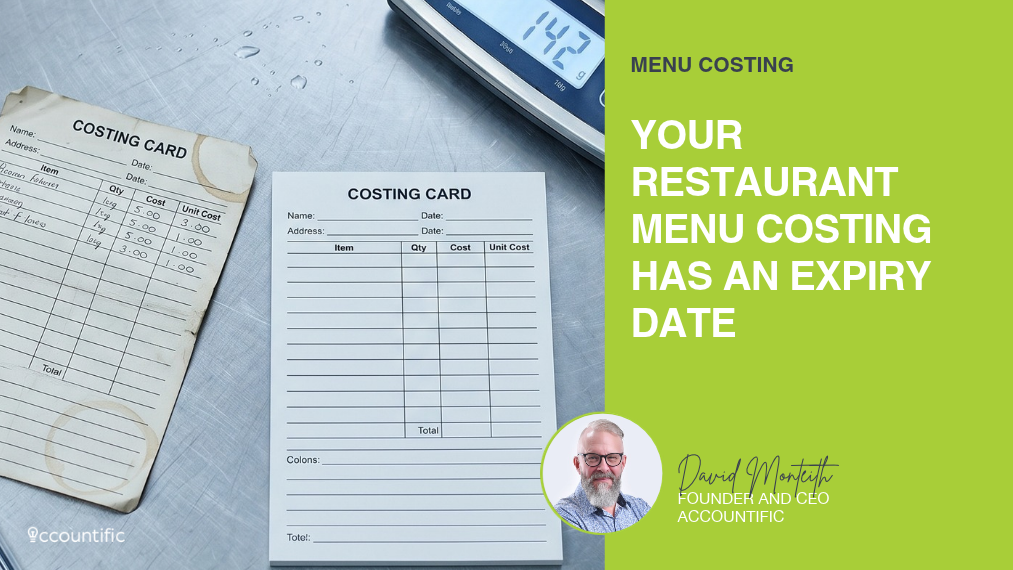
Why a Costed Dish Starts Drifting the Day You Finish It, and the Short Monthly Habit That Keeps It Honest
TLDR
Costing a dish is a real achievement, and most restaurant owners never get there. But a costed plate is a snapshot of one week’s prices, and it starts going out of date almost immediately.
Supplier prices move. Portions creep on a busy line. Somebody tweaks a recipe at the pass, and the costing card never hears about it. None of that announces itself. The number on your card stays exactly where you left it while the reality underneath it drifts, and the gap only surfaces when your food cost comes in several points above where it should be, and nobody can say why.
The scale of that drift is bigger than most owners assume. Grocery prices in Canada are up roughly 22 per cent since 2022, and retail beef climbed 17 per cent year over year in late 2025. A dish costed at 30 per cent at the start of a year can easily be running well into the forties by the end of it, on a menu price that never changed.
The fix isn’t an annual re-costing project, which is just the original full-menu problem wearing a different hat. It’s a short monthly habit built on triggers. A supplier price notice on a key ingredient. A seasonal menu change. A new cook on the station. A food cost figure that moved without an explanation. Each of those is a signal to re-cost the dishes affected, not the whole menu.
And it only sticks when someone owns it. A named person, a set time each month, an hour at most. Without that, re-costing quietly rejoins the list of things everyone agrees are important and nobody does.
Why You Should Read the Full Article
The article covers how fast a costed dish actually drifts and why the damage concentrates in your highest-volume plates, the four triggers worth building a re-costing habit around, why monthly checks on your top sellers cover most of the margin at risk in a fraction of the time, and how to assign ownership so the work survives a busy month. It also walks through what to do when a re-cost shows a dish has crossed its target, and how to spot portion creep, which is the drift nobody can see on an invoice.
How Accountific Helps
Accountific works only with Canadian food businesses, so supplier price movement is something we see in client books every week rather than at year-end. We flag the increases as they land and tell you which of your costed dishes they affect, so you’re re-costing the three plates that actually moved instead of guessing or re-doing the lot. We’ll also set the monthly checkup as a standing routine with a named owner and a target list, so it keeps happening in the months when everything else is on fire. Book a consultation directly with David at https://calendly.com/davidmonteith.
There’s a particular kind of frustration that shows up a year or two after a restaurant does its costing properly.
The owner did the work. They sat down, built the recipe cards, got the yields right, set prices against a target they chose deliberately. For a while the numbers behaved. Then food cost started climbing, slowly at first and then noticeably, and nobody could explain it. Nothing changed. Same menu, same suppliers, same prices.
That’s exactly the problem. Nothing changed on the card. Everything changed underneath it.
At the NEXT Food Expo in Calgary, David put it plainly in his workshop: costing your menu once is good, but it can’t be forever. A costed plate is a snapshot of one week’s prices, and it starts aging the moment you finish it.
How fast a costed dish actually drifts
Three things move, and they move at different speeds.
Supplier prices, which move constantly and mostly upward. This is the drift operators are most aware of and still tend to underestimate. The Bank of Canada noted grocery prices roughly 22 per cent higher than in 2022, with retail beef up 17 per cent year over year in late 2025. Canada’s Food Price Report forecast overall food prices rising 3 to 5 per cent for 2025. Those are averages, which means individual line items on your invoices moved further in both directions.
Portions, which creep. Nobody decides to plate more. It happens on a slammed Saturday when the line cook is working by eye instead of by scale, and then that becomes the normal portion because that’s what the kitchen has gotten used to. A ten per cent portion creep on a protein is invisible to a guest and material to your margin.
Recipes, which get adjusted and never reported back. A chef swaps a garnish, adds a sauce element, increases the cheese because the dish was coming out dry. All reasonable kitchen decisions, none of which make it back to a costing card sitting in a folder.
Put those together and a dish costed at 30 per cent food cost at the start of a year can be running in the mid-forties by the end of it, with a menu price that never moved. On a sector operating margin that Statistics Canada put at 4.1 per cent in 2024, that’s not a tolerance you can absorb quietly.
A costed plate is a snapshot of one week’s prices. Nothing changes on the card. Everything changes underneath it.
Triggers beat the calendar
The instinct is to schedule a full re-costing once a year. Resist it, because an annual re-costing project is the original full-menu problem in a different outfit, and it’ll be postponed the same way.
A trigger-based approach works better because it responds to the thing that actually changed.
A supplier price notice on a key ingredient. If your main protein, your oil, or your cheese moves past a threshold you set, say five or eight per cent, re-cost the dishes built on it that week. Not the menu. The dishes that use it.
A seasonal or menu change. Any time a dish comes off or goes on, or a seasonal ingredient swaps in, that dish needs a current number before it gets a price.
A new cook on the station. This one gets overlooked. A different person plating the same dish will plate it differently until they’re trained to the spec, and a plate spec is only real if someone has checked it recently.
A food cost figure that moved without explanation. If your period food cost drifts up two points and nothing obvious happened, that’s a signal. The variance is telling you something changed in the kitchen that your costing cards don’t reflect. Chasing the gap between theoretical and actual food cost is covered in our guide to costing your restaurant menu and pricing for profit.
Triggers mean you do small amounts of work in response to real events, instead of a large amount of work on an arbitrary date.
You don’t need to re-cost everything
This is the part that makes the habit survivable.
Your menu is not evenly important. A handful of dishes account for most of your volume, and a handful more carry the highest cost per plate. Those two groups, overlapping as they often do, cover the large majority of the margin genuinely at risk in any given month. The seasonal appetizer that sells four a week is not where your money is going.
So the monthly check is narrow. Your top sellers and your highest-cost plates. For most restaurants, that’s somewhere between five and ten dishes, and because they’re already costed, you’re not rebuilding cards from scratch. You’re updating prices on existing ones, which takes minutes per dish rather than the hour the first one took. If you haven’t costed anything yet, start with one dish rather than the whole menu and build from there.
An hour a month, done properly on the right ten dishes, keeps you closer to reality than a full annual re-costing that happens in March and is stale again by June.
While you’re in there, check the plate against the spec, not just the price against the invoice. Weigh a portion as it actually goes out. That’s the only way portion creep gets caught, because it will never show up on a supplier statement.
Someone has to own it
Here’s what decides whether any of this happens.
A monthly re-costing check that belongs to everyone belongs to nobody. It survives two months, gets skipped during a busy stretch, and quietly rejoins the pile of things everyone agrees are important, and nobody does. That’s not a discipline problem; it’s a design problem.
So name the person. It might be you, your GM, or your chef, and in a smaller operation it’s often whoever already handles ordering, since they’re closest to the invoices. Give them a set time, the first Monday of the month or whatever fits your rhythm. Give them the list of dishes in scope so they aren’t deciding what to check each time. And agree what they do with what they find, because a re-cost that identifies a problem nobody acts on is just a more precise form of knowing.
Write down where the costing cards live, too. A surprising number of restaurants lose their costing work to a staff departure, because it existed in one person’s spreadsheet and nowhere else.
What to do when a dish has crossed the line
Sometimes a re-cost will show a dish well past its target, and the question becomes what to change.
Raising the price is the obvious lever, and sometimes the right one, particularly when the increase reflects a cost rise your guests are reading about in the news anyway. But it isn’t the only option. You can bring the portion back to the spec it was costed at, substitute an ingredient the guest isn’t choosing the dish for, or decide the dish stays as it is at a higher food cost because of what it does for the rest of your business. We worked through all four in detail in What to Do When a Restaurant Dish Costs More Than You Thought.
The point of re-costing is that you make that call deliberately instead of discovering it at year-end.
A number that keeps up
Costing a dish is worth doing. Keeping it current is what makes it worth having done.
Pick your top ten by volume and cost. Put an hour in the calendar for the first Monday of next month. Give it to a named person. Set your trigger thresholds for the three or four ingredients that drive most of your food cost. That’s the whole system, and it fits inside a normal month.
If you’d rather not track supplier movement by hand, that’s where we come in. Accountific works only with Canadian food businesses, so we see price increases land in client books as they happen rather than at year-end. We’ll tell you which of your costed dishes a given increase affects, so you re-cost the three plates that actually moved instead of guessing or re-doing the lot, and we’ll set the monthly check up as a standing routine with a named owner and a defined list so it survives the busy months. Book a consultation directly with David at https://calendly.com/davidmonteith.
Key Takeaways
- A costed plate is a snapshot of one week’s prices and begins drifting the day it’s finished.
- Three things move: supplier prices, portions, and recipes. Only the first shows up on an invoice.
- Grocery prices are up roughly 22 per cent since 2022, and beef rose 17 per cent year over year in late 2025, so the drift is substantial rather than marginal.
- Annual re-costing projects get postponed the same way original costing projects do. Triggers work better than a calendar.
- The four triggers worth watching: a supplier price move past your threshold, a seasonal or menu change, a new cook on a station, and an unexplained shift in food cost.
- You don’t need to re-cost everything. Your top sellers and highest-cost plates carry most of the margin at risk.
- Updating an existing costing card takes minutes, not the hour the first one took.
- Check the plate against the spec, not just the price against the invoice. Portion creep never appears on a supplier statement.
- A monthly check that belongs to everyone belongs to nobody. Name a person, set a time, define the list.
Frequently Asked Questions
How often should I re-cost my restaurant menu?
Run a short monthly check on your highest-volume and highest-cost dishes rather than attempting a full menu re-cost on an annual schedule. For most restaurants that monthly list is five to ten plates, and because those dishes are already costed, you’re updating prices on existing cards rather than building new ones, which takes minutes per dish. Layer triggers on top of the monthly rhythm so a significant supplier price move or a menu change prompts an immediate re-cost of the dishes affected rather than waiting for the next scheduled check.
Why does a costed dish become inaccurate over time?
Three things change independently of your costing card. Supplier prices move continuously, and mostly upward, with grocery prices in Canada roughly 22 per cent higher than in 2022. Portions creep, usually during busy service when cooks plate by eye rather than by scale, and the larger portion becomes the new normal. Recipes get adjusted on the line, a garnish added, a sauce element changed, more cheese because the dish was coming out dry, and those changes rarely make it back to the card. Only the first of the three appears on an invoice, which is why price tracking alone doesn’t keep costing accurate.
What should trigger a re-cost outside my monthly check?
Four situations are worth treating as triggers. A supplier price notice on a key ingredient that moves past a threshold you set, commonly five to eight per cent, means re-costing the dishes built on that ingredient. A seasonal menu change or any dish going on or coming off means that dish needs a current number before it gets a price. A new cook on a station means the plate spec should be verified, since a different person will plate differently until trained to the spec. And a food cost figure that moves without an obvious explanation signals that something changed in the kitchen your cards don’t reflect.
Do I need to re-cost my whole menu every time?
No, and attempting to is the main reason re-costing stops happening. Menus are not evenly important. A small number of dishes account for most of your volume, and another small group carries the highest cost per plate. Those two overlapping groups cover the large majority of the margin genuinely at risk in a given month. A seasonal appetizer selling four covers a week is not where your money is going. Keeping five to ten dishes current protects more margin than an annual full re-cost that’s already stale three months later.
How long should a monthly re-costing check take?
About an hour for most single-location restaurants. The first costing of a dish is slow because you’re establishing the method, working out yields, and locating prices. Updating an existing card is a different task: you’re confirming current invoice prices against lines that are already there, which takes minutes per dish. Weighing a portion as it actually goes out adds a few minutes more and is worth the time, since it’s the only way to catch portion creep.
Who should be responsible for re-costing in a restaurant?
Name one person rather than assigning it to the team generally, because a recurring task that belongs to everyone reliably belongs to nobody. Depending on the operation, it might be the owner, the general manager, or the chef, and in smaller restaurants it’s often whoever handles ordering, since they already see supplier pricing. Give them a set time each month, a defined list of dishes in scope so they aren’t deciding what to check each round, and clear agreement on what happens with what they find. Also record where the costing cards live, since costing work is frequently lost when the person who held it in a personal spreadsheet moves on.
How do I catch portion creep?
Weigh a portion as it actually leaves the pass, unannounced, and compare it to the spec the dish was costed at. Portion creep will never appear on a supplier statement or in your invoice pricing, because the ingredient cost per kilogram hasn’t changed, only the quantity going onto the plate. It typically starts during busy service when cooks work by eye rather than by scale, and the larger portion gradually becomes what the kitchen considers normal. Checking the plate against the spec during your monthly re-cost is the practical way to find it.
What should I do if a re-cost shows a dish is over target?
You have four options, and a price increase is only one of them. You can bring the portion back to the spec it was originally costed at, which is often the quietest correction when the dish has drifted larger. You can substitute an ingredient, provided the replacement genuinely holds up on the plate. You can adjust a garnish or automatic side that was inflating the cost without adding much. Or you can decide the dish stays as it is at a higher food cost because of what it contributes to the rest of your business. The value of re-costing is that the decision becomes deliberate rather than something you discover at year-end.
David Monteith, founder of Accountific, is a seasoned digital entrepreneur and a Xero Silver Partner Advisor with over three decades of business management and financial expertise. He specialises in providing tailored Xero solutions for food and beverage businesses, streamlining accounting processes and delivering valuable financial insights that drive client success. David also serves as CFO of Great Work Online, a digital marketing agency serving food and beverage businesses, where he leads budgeting, financial oversight, and business management. This dual perspective gives Accountific clients more than bookkeeping mechanics — it brings a strategic view of how financial systems support better decisions, stronger operations, and long-term growth.